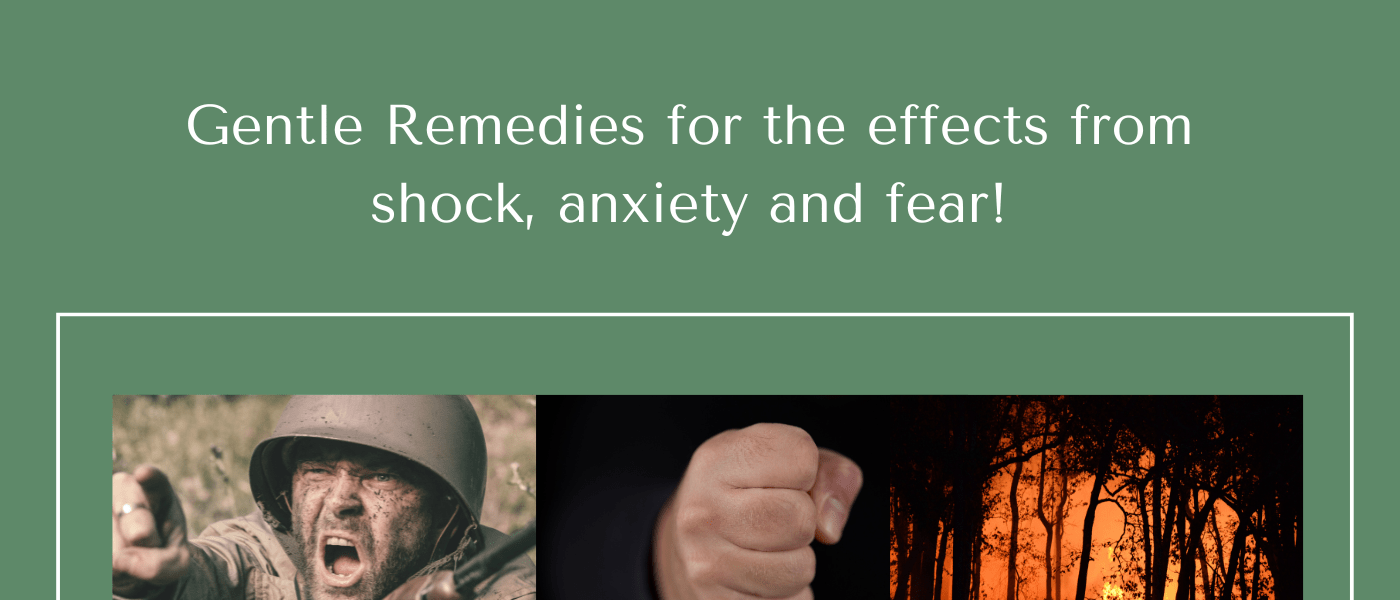
Whether an accident, floods, forest fires, earthquakes, conflicts, direct or indirect confrontation with the impacts of war or terror, the exposure to scenes of disaster, have detrimental impact on the mind and emotions.
The development of states of anxiety following such events of trauma, stress, worry and fear can be moderated and managed with Homeopathy.
There is a list of remedies that can help moderate symptoms in the publication that can be downloaded below:
Spring is here, and whether or not a vacation is already booked or only just in planning, it is likely to involve travel. Unfortunately for some the travel to the distant retreat or exotic destination can involve anxiety, sickness or jetlag, which can reduce much of the joy associated with the upcoming vacation, or can create stress that can ruin much of the gained recovery from the holidays. Luckily though, there are some homeopathic remedies for that!
For travel anxiety, the fear of boarding a plane, of anticipated accidents or the crowd traveling there are three main homeopathic remedies.
Aconite: Someone needing Aconite is not just anxious, but downright panics. He or she suddenly develops an extreme fear of death, and is deeply convinced their plane will crash. There is great anguish and he or she becomes restless with fear.
Argentum-nitricum: The people needing this remedy are very anxious, are restless, have to walk about. Their anxiety gives them diarrhea. They are afraid of heights, are claustrophobic and fear crowds. They fear they may be having an accident on their journey to the destination. .
Gelsemium: With this remedy there is an anticipatory anxiety. Persons needing Gelsemium may experience their muscles becoming weak and give way with anxiety. There may be trembling, numbness and the individual may get diarrhoea.
In the event of travel– or motion- sickness homeopathy too has help to offer.
Cocculus: Cocculus is the #1 remedy for motion sickness or sea sickness. The person needing Cocculus feels dizzy from motion, or the sight of moving objects. There is nausea and there may be vomiting. He or she has revulsion and nausea from the thought and smell of food.
Tabacum: Tabacum gives the individual an incessant deathly nausea with a sinking feeling and the sensation of an empty stomach. Deathly paleness, headache, faintness, a sensation of collapse and facial cold sweat can accompany this sickness. The fumes of tobacco are unbearable. Least motion can cause this sickness.
Petroleum: This motion sickness is characterized by nausea that comes with an empty feeling in the stomach, and is improved by eating. There is vertigo and dizziness that are felt at the occiput. This state feels somewhat like the heavy head after drinking alcohol. There is also a strong aversion to meat and fatty foods.
For the jet lag, when getting to or coming from a location in a different time zone there are other homeopathic remedies that could help.
Cocculus: is indicated for jet lag where the individual has difficulty getting to sleep and feels like he or she is still in the moving vehicle or on the flying plane.
Gelsemium: With this remedy there is heaviness and exhaustion and the body feels immobilized akin to paralysis.
Arnica: This remedy is a treat where there is exhaustion accompanying the jet lag. It can help keep you awake until local bedtime which can aid an easier and swifter adjustment.
The best matching remedy should be taken as and when needed. It is suggested to use the 6X potency, and to take one dose (1 tablet, 3 sugar pills, or 5 drops) every 15 minutes for up to two hours in the acute state. For anxiety and motion sickness 1 to 2 doses can be taken ahead of travel, for example when going to the airport and when boarding the plane.
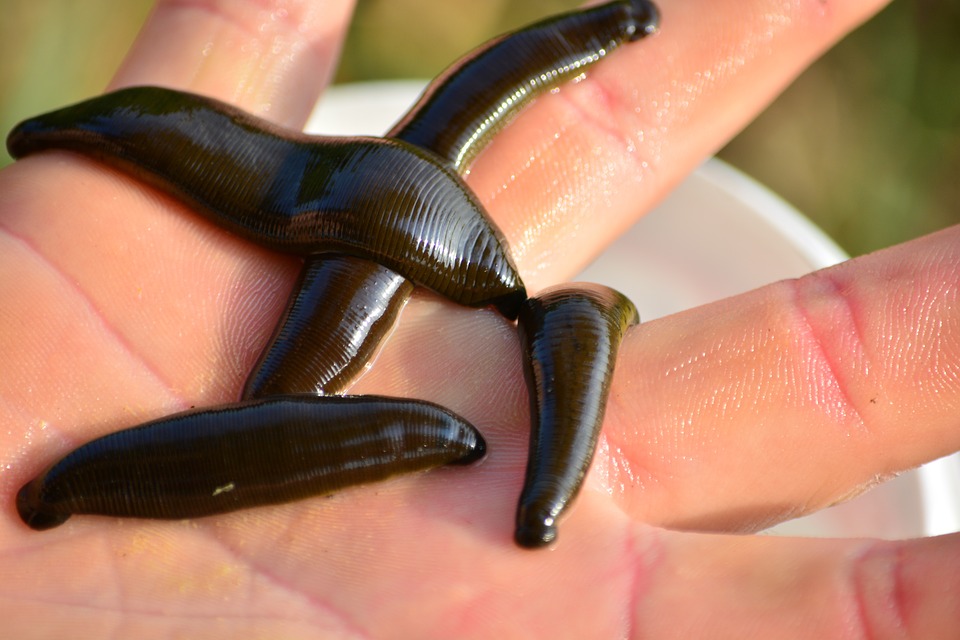
As part of the ancient ‘mainstream’ medical practices that have existed since antiquity, Hirudo-therapy, as a form of blood-letting to cure patients of ailments and diseases, has, throughout the millennia, been used to treat almost any infliction with illness. Only with the birth of what we today define as conventional medicine, has the medicinal use of leeches as therapeutic agents fallen into oblivion. Until then, leech-therapy was widely spread across Asia, Africa, America, the Middle-East and Europe.
Although never quite lost in the CAM realm, in more recent times, conventional medicine has instigated a revival of this ancient treatment practice, having found evidence of its efficacy for diverse diseases, such as circulatory and cardiovascular disorders, cancer, infectious and inflammatory diseases, arthritic and rheumatic processes, for surgical interventions, as in replantation and breast augmentation surgery and, yes, as anti-aging and cosmetic treatment.
Varicose veins, thrombosis, hypertension and coronary artery disease, arthrosis, osteoarthritis, rheumatism and gout have found a benefit from the treatment with leeches. Ailments such as herpes zoster, otitis media, asthma, hyperlipidemia, ophthalmic diseases, septic shock, cerebral infarction, ovarian cysts, dental diseases, and wound-healing disorders are further indications for the treatment with leeches.
The treatment with Hirudo medicinalis officinalis, the leech, generally sees the leech placed on the skin of the affected area, where it bites and sucks blood, in doing so, releasing a number of bio-active substances secreted from its salivary glands. Within the saliva of the leech are contained blood-thinners, anti-coagulants, vaso-dilators, enzymes, and amino-acids, to name a few. There are about 20 therapeutic ingredients in the saliva of leeches. Hirudin and Eglin are the two scientifically most investigated substances. Eglin is an anti-inflammatory and analgesic, and Hirudin an anti-coagulant, and anti-spasmodic.
The individual leech will suck around 10 to 20 ml of blood and will ‘fall off’ the site of the bite, when it has finished feeding, after 30 to 90 minutes. The bite-wound will continue bleeding for up to 12 to 24 hours, which is part of the benefit of the therapeutic blood-letting. A treatment will usually consist of an application of 2 to 6 leeches.
Traditional Chinese medicine has yet another approach to leech therapy. The ‘Shui Zhi’ is used as an orally administered drug. The leech is dried and ingested for the treatment of blood stasis, uterine growths and traumatic injury. As a homeopathic remedy Hirudo medicinalis, is referred to as Sanguisuga officinalis. It is indicated for hemorrhages, in particular those of the rectum.
Today leeches are cultivated in farms. This is done for hygienic purposes, and due to the fact that the extensive use of leeches throughout the 18th and 19thcentury has made the medicinal leech become almost extinct. A leech is never applied to more than just one patient.
A look at its historic use almost commends Hirudo-therapy as a universal cure-all. Its importance in history, emphasized by the denotation of the physician as ‘leech’ and his materia medica as ‘leechdom’, shows just how leech therapy dominated the treatment of patients in the old days. The efficacy, increasingly supported by research, returns Hirudo-therapy into the conventional medical sphere, and at that brings with it great potential for a range of diseases.
References:
Michalsen A, Moebus S, Spahn G, Esch T, Langhorst J, Dobos GJ. (2002) ‘Leech therapy for symptomatic treatment of knee osteoarthritis: results and implications of a pilot study.’, Alternative Therapies, 8(5),[Online]. Available at:http://www.ncbi.nlm.nih.gov/pubmed/12233807 (Accessed: June 2016).
Bapat RD, Acharya BS, Juvekar S, Dahanukar SA. (1998) ‘Leech therapy for complicated varicose veins.’, Indian J Med Res., 107, pp. 281-284 [Online]. Available at: http://www.ncbi.nlm.nih.gov/pubmed/9701897 (Accessed: June 2016).





 CareClin