

The implausibility of the Vital Force in the existent medical paradigm

“Science has brought great advancements, yet all research has not brought us one step closer, in the question of the origin of life” – Prof. Rouviere, as quoted in Kent (page 89 – (1))

For homeopathy and many of the traditional and alternative health practices (2, 3) it is accepted without question, that for a material organism to come to life it needs an elemental principle that permeates and enlivenes the organism (1).

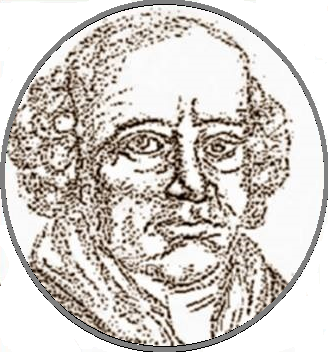
Hahnemann terms this anima or archeus, dynamis or vital force. This life-giving principle he describes as the source of all functional ability of the organism. Without it no physical action, emotional expression or perception, not even sustenance of life is possible (Aph.10 – (4)).

Therefore, according to Hahnemann, if man is ill, it is the omnipresent spirit-like vital force in the body that is ailing. Such inharmonious state, causes the adverse perception that is known as disease (Aph.10.11 – (4)).

Kent (1) interprets these statements of Hahnemann, stressing that it is the subjective and objective symptoms thanks to which it is possible to recognize a state of illness. Disease is the disruption of order, a disequilibrium in the functions of the organism. Therefore, a state of illness, much like one of health, spreads to the entire organism by way of the immaterial life – principle (1). Disease is thus a disturbance of the Vital Force (1, 3).

Conventional medicine understands illness and disease as “pathological cellular biochemistry” (page 2 – (6)); caused by influences produced by the infliction with bacteria, viruses or an inert hereditary dysfunction(5, 6). Therefore, an illness is to allopathic medicine, a material emergence, an alteration of body tissue and fluid. Furthermore, conventional medicine insists on healing being a consequence of drug intake. In homeopathy and other alternative and traditional therapies, healing occurs by the “reactive and curative power of the organism” (page 41 – (3)), of the inherent vital force, that in its progression leads to recovery (2).

The Vital Force does not belong to the belief-system of Science (5). Conventional medicine boasts with seemingly strictest scientificity, and the principle of scientificity insists that cases of sickness, their medicines and all issues pertaining to healing and treatment have to be testable according to the framework of research, that is strictly compliant with the principles of Science. Only if such investigation, according to this predominant paradigm, identifies a causal influence creating disease, and proposes an effective curative, is a therapeutic approach considered a scientifically acceptable treatment (5).

Within this pledge lies the crux to the acceptance and acknowledgement of the homeopathic treatment approach. According to conventional medicine “the Vital Force is not ascertainable” (page 3 – (6)) and thus homeopathy is denied scientificity. The Vital Force as causal principle is not measurable within the current conventional means of research, thus homeopathy is non-compliant with the structures of the existent paradigm and is termed as unscientific and is as such rejected (5, 6).

Yet, life itself, the origin of it, has not been made perceptible despite the vast methods of investigation that are available today (5). What research has and is documenting, are merely the life-concomitant chemical and physical processes and changes, but not life itself. It is difficult to accept and acknowledge that an immensely complicated and complex structure as the human organism, with its expansive number of cells, molecules, atoms, and theirmanifold interactions, does not involve a system or higher order that has constructed this material complex. A coincidential accumulation of this intelligent construction is hardly plausible (5). Therefore there must, behind this complex material organism, lie an entire energetic sphere of unimaginable complication, that has created, is maintaining and operating this material structure (5).

The human being has no sensory organ that can surpass the material, and is able to reach into the energetic sphere. Yet, taking into consideration that energies exist, magnetism, or gravitation, for example, that are not palpable, or perceivable by the human senses, emphasizes and supports the existence of such a sphere (5). As such, the actual cause of health and disease lies in this realm that has not been investigated and is yet unknown to us (5). Therefore, what instigates life in the material body, the source of all life-cycles of the human being, has yet to be determined (5). For homeopathy, and many traditional and alternative practices, the spark of life is ignited by an energetic principle; for homeopathy this is the Vital Force (2).

Science has led to extensive advancement where material events are concerned. Yet only, where the material sphere of the material organism is concerned. The actual cause for illness or health it has not identified yet (5).

Why and how the Vital Force or a causal energetic principle, got obsolete in medical thinking, considering it’s widespread and long-lasting belief in the traditional healing systems (2), is unclear, but it’s rejection has given rise to fundamental questions potentially influential on the understanding of all vital themes of life in general, as well as the comprehension of health, disease and cure. Until evidence for the existence of this energetic sphere is found, the implausability of the Vital Force, for conventional medicine, will remain and homeopathic effectivity will continue to be questioned.

References:

[1] Kent, J. (1981). Zur Theorie der Homöopathie (2. Auflage) Leer: Verlag Grundlagen und Praxis.

[2] Stux, G. (1996). Akupunktur – Grundlagen, Techniken, Anwendungsgebiete München: C.H. Beck

[3] Jackson, R. (2001). Vis Mediatrix Naturae, vital Force to innate intelligence and concepts for 2000 Journal of Chiropractic HumanitiesVol.10, 41-47 [online] last accessed October 2012, available at URL: http://dx.doi.org/10.1016/S1556-3499(13)60132-1

[4] Hahnemann, S. (1974). Organon der Heilkunst (2.Auflage) 6B Heidelberg:Karl F. Haug Verlag.

[5] Voegeli, A. (1980) Warum so krank? Rheine: Verlag Volksheilkunde

[6] Milgrom, L. (2009) Is a unified theory of homeopathy and conventional medicine possible? Hpathy,[online] last accessed January 2014, available at URL: http://hpathy.com/scientific-research/is-a-unified-theory-of-homeopathy-and-conventional-medicine-possible/

The vital force – a concept lost?

The vital force as a fundamental principle of the homeopathic treatment approach describes a life-inducing, spirit-like power that is inherent to all living things, human, animal, insect, plant.

Termed by Hahnemann as the “dynamis” it enlivens the material organism [1]. Without this vital energy the material body is unable to function, to conduct physical exertion, process or express emotional perception. All expression of life is impossible, not even the preservation of the self. This force is instinctive and without intellect. Its sole purpose is to maintain a harmonious equilibrium within the healthy organism. The dynamis has no curative ability [1].

This concept is not alien to medical thinking or the healing practices. In particular the traditional and alternative treatment approaches see a vital principle as foundational element of their healthcare philosophies.

At the root of the traditional Chinese belief system on the nature of the existence of life, and basic to the traditional medical thinking, is a universal life-force or life-energy termed “Qi”. Qi is the inherent source of all life, the life-force of nature [2]. All organ function finds its provoking force in Qi. Qi flows in the organism enlivening it. Although Qi is built from different Qi-energy forms on different levels within the body, according to Traditional Chinese Medicine, its immaterial existence is what breathes life into an otherwise lifeless material organism [2].

In the Ayurveda, the universal life-force that instigates all function of the living body, is known as Prana or Kundalini [2].

In about 97 cultures and throughout all time, a vital energy bringing the body to life is a manifest concept of the philosophies of life. It explains and nurtures the understanding of illness and cure [2]. Yet toward the beginning of the 20th century this principle was abandoned in the western oriented conception of medicine and has since not found its way back into what was then born as the new conventional medical approach.

Where and why was this fundamental element lost? It always was and still is an established, accepted and valued component of the traditional and alternative practices. The dismissal of this property has undoubtedly impacted the development of conventional medicine, and the research that strived and still strives to be found scientific as per the standards of this allopathic approach. It has in the past been extremely difficult to provide evidence of effectiveness of the alternative practices as they are without exception required to be trialed using the standards of conventional medical testing. Yet these trial methodologies breech the most basic principle of traditional and alternative medicine. According to these requirements, investigations into the traditional and alternative approaches have been and are bound to be only inconclusively and unsatisfactorily appraisable.

What if the consequences of the rejection of a vital principle biased the medical concept of allopathy at the very root? What if the ignorance of a vital essence or life-energy has flawed and is corrupting all research and has mislead and is misleading all knowledge derived from it? What is the extent of impact on conventional medical thinking and on the scientific endeavours of finding and explaining disease, treatment and cure? Where would medicine and its research stand today had this principle been considered and had it been thoroughly investigated?

What held true for many thousand of years and within multiple health concepts and practices was suddenly found to be…wrong, impractical, useless ?? Why? Who decided to abandon a ‘natural law’ only as recently as about 100 years ago? How could the then new and modern concept of healing become as dominant over the traditional practices and as ignorant of this particular traditional principle?

The vital force is by all means not the only principle of the traditional practices that finds no consideration in conventional medical thinking, but in the practice of homeopathy for example, it constitutes the most fundamental element that is of great value in the understanding of disease and healing.

What was true and accepted for so long and had significant impact on diverse ancient and traditional health-care systems could, so one may be lead to think, be considered trialed and proven. One can only imagine where conventional medicine would stand today if its treatment, testing tools and scientific framework had taken the vital force into consideration in its creation.

[1] Hahnemann, S. (1974). Organon der Heilkunst (2.Auflage) 6B Heidelberg:Karl F. Haug Verlag.

[2] Stux, G. (1996) Akupunktur – Grundlagen, Techniken, Anwendungsgebiete München: C.H. Beck

The Art of Prescribing as postulated by Hahnemann

There exists a lot of controversy and confusion about the homeopathic art of prescribing. According to Hahnemann, the decisive factor in selecting a potency and deciding on repetition or dosage of a prescription, should be found in the susceptibility of the patient. Yet, most diverse approaches to homeopathic prescribing are known, and as there are many practitioners, there are many different forms in which homeopathic remedies are prescribed.

This paper seeks to shed some light onto the posology and dosology of homeopathic remedies. The information constituting this article is taken solely from the 6th edition of the Organon [1], in order to provide an insight into exactly how Hahnemann wanted his fellow homeopaths to proceed with the administration of a remedy.

It has to be clarified at this stage that, in a homeopathic context, prescribing incorporates different aspects essential for the treatment of patients. The potency, the dose and the frequency of administration are all decisive factors influencing a patient’s recovery from illness.

         “Homeopathy [hence] avoids even minimal weakening, and as possible, all creation of pain…   therefore only uses for its cure such medicine whose ability to dynamically modify and alter the state of being is known…the same is given only in simple and subtle doses – so small that… no        weakening or pain is caused, just enough to relieve of the natural disease…”. (Organon, p.17)

DOSOLOGY: This, which Hahnemann already mentions in the Introduction to the Organon, he very clearly stresses again in Aphorism 238, where he ascertains that if a remedy has been appropriately selected, it is the single, smallest dose of it that can prevent repeated disease onset and may bring on, by itself, the restoration of health. In Aphorism 272 he stresses that a single globule placed dry on the tongue constitutes one of the smallest doses to be used to treat the moderate, only recently arisen state of illness. He describes that by this small dose, only a few nerves are touched by the medication.

He continues that if such a globule is triturated, mixed with milk sugar, is then diluted in water and vigorously succussed prior to administration, a yet more potent remedy is created, of which even the tiniest amount of a dose suffices to touch many nerves.

Hahnemann places emphasizes that in no case is it necessary or acceptable, to give more than just one single remedy at a time. He stresses that, “ it is not correct, to attempt to impact with plentiful, what can be achieved using only a single” (Aph.273).

In Aphorism 247 he explains that it may be necessary to administer even the best selected remedy in multiple and different forms before the vital force is able to eradicate the disorder. Therefore, where the single of one globule does not suffice to bring about cure and a repetition of the well chosen homeopathic prescription becomes necessary, he insists that a remedy must undergo a “new dynamisation” that he terms the “plus methodology”. This mode of administration is a progressive, minute alteration of the selected homeopathic remedy. He first mentions this approach in Aphorism 247 and gives details of the modification process in Aphorism 248. This new dynamisation (Aph.248) is an even gentler approach to prescribing that, because of its progressive nature, makes each administration more potent in its curative strength. The administration of a such plussed remedy, needs to be continued until the state of illness of the patient is generally improved, or only weak symptoms, now caused by the homeopathic remedy-illness, appear ( Aph. 280). The vital force, now free of the natural disease will take only a short time to be relieved of the symptoms of the remedy-illness and the patient can be considered as restored to health (Aph.281)

Yet, Hahnemann cautions that even using the plus method,a remedy, an aggravation of symptoms may occur. In such a case, the quantity, that is the dose in which this remedy is administered, requires to be reduced, and the repetition of administrations needs to be lessened in frequency or may even need to be abstained from for some time. He refers to this again in Aphorism 282.

The homeopathic dosis, according to Hahnemann, only needs to be high enough to induce a healing reaction, while at the same time it needs to be sufficiently minute to assure the gentlest, but most rapid recuperation.  (Aph.278). He stresses in Aphorism 279, that the dosage of a remedy, can never be made too small to not still be stronger that the natural disease.

POSOLOGY: When it comes to posology, that is, the selection of the appropriate dosis of potency in which to administer the appropriate remedy to the patient, Hahnemann indicates in Aphorism 246 that a homeopathic remedy should be “carefully selected, highly potentized, diluted in water and be given in the smallest possible dose”. He teaches, that only experimentation, careful observation of the sensitivity of the patient, and experience can determine the potency of the prescription for each individual case (Aph.278).

Hahnemann further points out in Aphorism 246 that the potency of a repetition dose must differ from that of  prior administration and to a subsequent one, in order to avoid any adverse reaction. Such an aggravation may occur, if a dosis is repeatedly administered without modification.  This progressive alteration in potency is needed, such that the diseased vital force can be altered as such, that it, without much trouble, is brought to recovery (Aph. 269).

The plus method Hahnemann describes in aphorism 248. He explains that 1 globule of the homeopathic remedy needs to be dissolved in a solution of 8 tablespoons of water that contains 10 to 15% of alcohol. The mixture that is created as such must then, prior to each administration, be vigorously shaken 8 to 12 times. All the subsequent administrations therefore, following this progressive dynamisation, are of a minutely altered potency. Such a constantly modified prescription can be repeatedly given to a patient without fearing the occurrence of adverse reactions (Aph.269). It is only if the symptoms of the patient change that a new, now better suited remedy needs to be selected. This then may in the same way be successively modified prior to administration, until its need, in turn, is exhausted or the patient’s health is restored.

REPETITION:  Hahnemann starts by pointing out that as long as improvement of a patient’s state continues, all repetition of any homeopathic prescription is prohibited (Aph.246). He describes that in such a state, the homeopathic remedy continues to perform its healing action, and is proceeding towards cure. In Aphorism 238 Hahnemann reminds us that in most cases a single dose will not suffice, but mentions in Aphorism 246 that particularly in acute illness, a single dose of an appropriately selected remedy may lead to total recuperation. He also stresses that there are exceptions and circumstance under which a repetition is indicated in order to promote faster recovery. This is particularly the case in chronic illness (Aph.246).

Hahnemann states that such exceptions and the indicated repetition must be led by experience, and that the appropriately selected remedy must be modified by the plus metodology (Aph.248). Such a remedy may then be given repeatedly, “ daily, if necessary for months ”. He specifies that such a progressively altered prescription may be administered to the patient presenting a chronic state, daily or every second day, while in acute cases, such altered doses may be administered as frequently as “ every 6,4,3, 2 hours, or even more often ”. Unmodified remedy repetition he stresses, “ generally creates a tragedy ” (Aph.276).

A principal exception to the above described posology and dosology in homeopathic treatment, and a completely different mode of prescribing is required in the case of the principle miasms. Hahnemann stresses that these require doses of ever higher and higher potentisation, that may be administered daily or even several times a day (Aph.282).

Hahnemann teaches in Aphorism 273 that it is not only the best selected remedy that treats the case, but that it is also its appropriate dosage, or rather the minuteness of it. He emphasizes in Aphorism 277, that “ this minutest dosage of a best potentised homeopathic medicine, has greatest healing potential, that is almost magical, the more homeopathically it is selected ”. Vice versa, a remedy that is homeopathically best selected, must have greatest healing potential, the smaller its dosage is reduced in minuteness for gentle healing.

It becomes evident from the above that homeopathic prescribing incorporates three elemental aspects to be considered in the treatment of patients. The practitioner needs to match the potency, the dosis and the repetition of his prescription to the sensitivity of the vital force of the patient. If this is done appropriately the patient’s recovery from illness is the definitive achievement.

Reference:

[1] Hahnemann, S. (1974). Organon der Heilkunst (2.Auflage) 6B Heidelberg:Karl F. Haug Verlag.

first published at Hpathy 2014

The Art of Taking a Case as postulated by Hahnemann

Supposedly there are as many approaches to taking a case as there are homeopaths. For the homeopath, at the very core of the patient-practitioner encounter, lies the deeper purpose of extrapolating from the expressions of the patient, sufficiently detailed information concerning the presented ailment or disequilibrium. This information retrieved during the consultation, is explored for the patient’s peculiar and idiosyncratic symptoms. Only from those unique and specific expressions can a best matching remedy be selected that most precisely meets the picture of the current presenting state of that particular patient. The art of finding the most appropriate, curative remedy is the fundamental purpose of homeopathic practice, and the greatest quest of the homeopath for his patients.

Hahnemann, in the Organon, gives specific descriptions of how disease is viewed in a homeopathic context, how remedies are made, how healing is expected to proceed, how a case is to be taken and much, much more. The following is a descriptive compilation of the directions Hahnemann gives to the practicing homeopath, in his Organon [1], on how to take a patient case.

Hahnemann begins to elaborate on the investigation into a case history as early as in Aphorism 6, where he pronounces characteristic traits that a practitioner requires when taking a patient’s case. He states that the homeopath has to be “…sharp-witted, but unprejudiced”. He continues in this Aphorism to describe, in a generalised form, what it is that the practitioner has to note in order to treat an ill patient. He stresses that a practitioner has to recognise “divergence of the human conditions from the healthy prior state…that which he [the patient] has perceived himself, his surroundings have found and the practitioner may note” (Aphorism 6). Hahnemann gets more specific in Aphorism 7, where he insists that attention must be paid to retrieving the totality of symptom expressions of the patient. He indicates that “It is the only means to convert illness to health”, and it is “… the primary, the only thing that a practitioner has to note and remove with his art…” (Aphorism 7).

Hahnemann further describes how a homeopath should go about retrieving, from the patient, the disease specific information. The practitioner is reminded in Aphorism 82 of the Organon of Medicine that he should be “meticulous in the appraisal of the plumbable symptoms and idiosyncrasies” of the presented disease, and is further cautioned that it is indispensable to strictly individualize each case of illness (Aphorism 82).

In Aphorism 83 then, Hahnemann  pronounces and emphasises, further characteristics that a practitioner should express when appraising an individualised patient case. Individualized case taking, so Hahnemann states, requires of the homeopath to express “ …nothing but unbiasedness, healthy senses, and attentiveness in his observation …”.  Hahnemann also urges in this aphorism that the homeopath should be “accurate in the note-taking of the disease picture”.

Hahnemann gives precise directions on how to proceed when taking a patient’s case. He proposes in Aphorism 84 that the following procedure should be followed:

         “The sick brings forth his discomfort.

         The family members tell of his complaint, his comportment and whatever else they have perceived on him.

         The practitioner sees, hears and notices by all other senses what is altered and unusual in the     patient.

         The practitioner takes notes in writing of all, and in the same expressions that the patient and his relatives used”.

In the succession of this aphorism Hahnemann stresses that the homeopath should not interrupt the descriptions that are given, unless the speaker were to drift to other topics. For the purpose of enabling correct note-taking Hahnemann suggests that the patient and his family should be reminded at the beginning of the consultation to speak slowly (Aphorism 84). Hahnemann even recommends clearly structured note-taking in order to facilitate amendment during the progression of the case-taking (Aphorism 85).

Once all persons have completed their narrations, so it is indicated in Aphorism 86, the practitioner should complement the descriptions of the case by adding specific characteristics to the symptoms. For this purpose the homeopath should have the patient ascertain each single symptom by further interrogating him for confirmation of the nature of the expressions of the complaint. As such the practitioner should seek further specification by asking about the time when a situation occurred, about occurrences before, during or after medication, about the nature, sensation, duration and location of pain. He should inquire the time of day or night and the bodily positions in which the symptoms are better or worse and should verify the exact occurrences of the causative circumstances (Aphorism 86).

In Aphorism 87 then, Hahnemann reminds us of an important aspect to keep in mind when taking a case. He emphasizes that the practitioner should not ask leading or suggestive questions as this could lead to imprecise responses. In fact the practitioner should pay special attention to utilize a general terminology that prompts the patient or other persons concerned to give particular comments (Aphorism 88).  Information that may not yet have been mentioned in the patients or relatives account of the diseased state, such as the bodily functions and dispositions should be explored at this stage. These include: “bowel movement, micturation, sleep pattern, temper, mood, reflective ability, appetite, taste, thirst, food preferences and aversions, comportment following food or drink intake, particularities of head, abdomen or limbs” (Aphorism 88).

Should the practitioner still feel he has not fully been informed, he should request further clarification to complement what he needs to know of the case. As such, specific examples are given by Hahnemann in Aphorism 89. Here he specifies supplemental questions for specific bodily functions, perceptions and sensations. Following this appraisal then Hahnemann indicates, that the practitioner should take note of what he himself perceives in the patient and his state. By further interrogation he should compare these peculiarities to the statements the patient has made earlier, and should note discrepancies in their diseased nature to that in a state of good health, so Hahnemann continues in Aphorism 90 of the Organon. Hahnemann further highlights this in Aphorism 91 where he stresses that the practitioner must always refer to the healthy state of the patient when appraising symptoms of the diseased condition of the patient. Only by comparison to the “original” state can the homeopath identify the “Gestalt”, the guise, of the illness.

Incidences and occurrences ultimately preceding a disease should also be noted. Hahnemann mentions these in Aphorism 93, where he indicates that such events may not be out rightly spoken of by the patient or his relatives. These, he indicates, should be sought to be extrapolated from interrogations that “fortunately” may point to such events, or should be found out by “private investigations” (Aphorism 93). He describes such events to be suicide attempts, alcohol dependency, unlucky love, jealousy, grief, and abuse; amongst others.

Customary habits need also to be investigated, as these could be causative factors of a diseased state. Hahnemann indicates that the removal of such habitual practices could facilitate the recovery from illness (Aphorism 94).

Once more Hahnemann points out that the practitioner should be meticulous in his case-taking, when he stresses that the appraisal of information, in particular of chronic diseases, should be “as accurate and detailed as possible, down to the smallest of particularities” (Aphorism 95).

In Aphorism 98 Hahnemann again cautions the practitioner and emphasizes what he already stressed in Aphorism 6 and 83.  Here he insists again that it requires “discretion, precariousness, the knowledge of human nature, cautiousness and much patience to investigate the true and complete disease picture and its details “.

Hahnemann finishes his elaborations on appraising a case, by differentiating the art of case taking of acute from chronic diseases. He reminds the practitioner in Aphorism 99, that the acute case of illness requires of him less investigation, but continues to stress the necessity to determine a detailed disease picture. Hahnemann indicates that the lesser duration of the acute state facilitates the case taking, as the details of the illness are still fresh in the mind of the patient and his relations, and explains that as a consequence the account of the presented state is likely to be more detailed and precise.

Hahnemanns instructions make clear that taking a case is a complex task that if carried out appropriately conveys to the practitioner the homeopathic remedy that is the closest match to the presented state of the ill patient. A swift recovery of the patient is therefore the reward for the patient’s detailed description, and the in-depth interrogation of the practitioner.

Hahnemann insists in his writings: “Imitate me, but imitate me correctly and meticulously” [2], therefore he gives practical instructions for the practitioner to follow. His ‘Organon of healing art’ [1] is not only a book depicting the fundamental principles of homeopathy, it is also an instruction manual that precisely outlines how a practitioner should execute his art. It conveys specific and practical information on the execution of the homeopathic art of practice, and advice for handling the diverse forms of disease situations. It even contains Aphorisms where Hahnemann cautions the practitioner and instructs on his behavior in the homeopathic consultation, as the above synopsis has shown. Hahnemann gave a valuable outline and its application falls to the practitioner.

References:

[1] Hahnemann, S. (1974). Organon der Heilkunst (2.Auflage) 6B Heidelberg:Karl F. Haug Verlag.

[2] Dr. Schweikert (1830). “Machts nach aber machts genau und sorgfaltig nach”, Zeitung der naturgesetzlichen Heilkunst für Freunde und Feinde der Homöopathik. Dresden/ Leipzig: Arnoldischen Buchhandlung.

first published at hpathy 2013

The homeopathic therapeutic relationship – a patient-centered union ?!

The alliance between homeopath and patient is a critical one. The homeopath, by way of the homeopathic principles, requires of the patient to share, reveal, and convey in explicit detail the nature of what ails him [5]. The patient needs of the homeopath, in order to feel secure and prepared to share such intimate information, that he provide a trusting and comfortable space in the consultation.

The homeopathic consultation is one that differs to that exercised in conventional medical practice. It is dominated by the patient and not by the practitioner. The contrary is customary in the encounter between general practitioner and patient. Here the patient assumes a passive role while the GP identifies what ails the patient and proposes a medicinal intervention [1]. The homeopathic patient-practitioner union is reliant on what the patient perceives as symptoms of the disease in his totality, and as such is therefore patient-led. This fact alone does not suffice to provide a patient with trust and ease in the consultation. Such sensitive union requires other elements or ‘tools’ in order to ascertain to the patient that his encounter with the practitioner is a safe and comfortable space. Person-centered qualities may facilitate what is necessary to establish such features in this union.

The ‘person-centered approach’ was first described and explained as such by Carl Rogers, one of the initiators of the humanist approach to psychology [2]. In the field of psychology and counselling, the focus of the practitioner is on activating the patients most inert resources in order for growth to be achieved. The believe underlying this concept is that the patient knows best of his own needs. The practitioners sole role is to aid the patient in accessing or recognizing these resources [3] [4]. Homeopaths can, following the principles underlying homeopathic practice, as is outlined in the Organon [5], borrow aspects from this approach in order to facilitate a comfort-zone to the patient, in the consultation. Yet, ‘patient-centered’ does not only mean that the focus is on the patient, his descriptions and narrations, but actually emphasizes much more on the practitioners presence within the therapeutic encounter [6] [7] [8] .

Of the 6 core conditions that inform the person-centered approach, in application to a homeopathic context, the following descriptions are useful to the development of a functioning therapeutic relationship:

The practitioner has to be there, qualitatively, with the patient   in the consultation. [6] [7] [8]. This he may express by being empathic and understanding towards the patient [7]. A form of mutual trust [4] of practitioner and patient aids in abolishing discomfort and may provide security in the therapeutic union. This trust may be further deepened by the practitioners expression of acceptance and non-judgement towards the patient and his case. Termed the ‘unconditional positive regard’, this requisite is an acknowledgement of the fact that every individuals actions are grounded on his very own personal reasons [9]. A practitioner may further deepen this trust if he is genuine toward the patient and if this is conveyed by the practitioners own authentic expressions arising from the patients descriptions in the consultation. The patient is then believed to be congruent towards the patient [10].

These attributes of the homeopathic practitioner may serve to create the ‘trusted zone’ for the patient, where he feels comfortable enough to disclose his ailing state in such detail as is relevant for the case-taking. Only if the idiosyncrasies, the most individual characteristics of the disease in the patient, by way of the patients own expressions, are reported, can the practitioner select the best matching remedy to suit the patients case [5]. A relationship that lacks trust and comfort may suffer of misinterpretation of the case-taking as the reported descriptions and expressions may have failed to inform the case sufficiently. The elements, native to the person-centered approach, are to an extent natural to the homeopathic patient-practitioner encounter, but the awareness of a patient-centered attitude that is expressed toward a patient, may facilitate its use as a tool to promote the creation of a trusted and comfortable union in the consultation.

References:

[1] Hartog, C. (2009) Elements of effective communication-Rediscoveries from homeopathy [online] Patient education and counseling Vol.77, pp.172-178, article from Elsevier, last accessed 02 October 2010

[2] Casemore, R. (2006) Person-centered Counseling in a Nutshell London: Sage publications Ltd.

[3] Pörtner, M. (2000) Trust & Understanding: The person-centered approach to everyday care for people with special needs Ross-on-Wye: PCCS Books.

[4] Wilkins, P. (1999) The relationship in person-centered counseling. Chapter 3 IN Feltham, C. (Ed.) (1999) Understanding the counseling relationship London: Sage Publications Ltd.

[5] Hahnemann, S. (1974) Organon der Heilkunst (2.Auflage) 6B Heidelberg: Karl F. Haug Verlag.

[6] Lane, R., Koetting, M. & Bishop, J. (2002) Silence as communication in psychodynamic psychotherapy [online] Clinical psychology review Vol.22, pp.1091-1104, article from sciencedirect, last accessed 23 September 2010

[7] Nacht, S. (1963) The non-verbal relationship in psycho-analytic treatment [online] The international journal of psychoanalysis Vol.44, pp.334-339, article from PEP Web, last accessed 04 October 2010

[8] Freshwater, D. & Stickley, T. (2006) The art of listening in the therapeutic relationship [online] Mental health practice Vol.9, No.5, pp.13-18, article from Ebscohost, last accessed 04 October 2010

[9] Tolan, J. (2003) Skills in person-centered counseling and psychotherapy London: Sage publications Ltd.

[10] Merry, T. (1999) Learning & Being in Person-Centered Counseling Ross-on-Wye: PCCS Books, pp.85-117.