Slowager – the new program for a happier, healthier you.

Age, in our modern society, has been labeled a disease. This is a most remarkable marketing stunt that has given rise to a specialized health and cosmetic industry. The natural evolution of life has been deemed a state needing treatment, correction and optimization. Human values of physical beauty, work ability and societal acceptability have been stigmatized negatively, and have as such instigated an inherent race against time; the time that is the normal progression of life.

This race against the natural cycle of life is one we are all subjected to, and there is no one that can win this race. NO ONE can NOT age, and the extensive and expensive industry tempting us to buy interventions, procedures, creams, lotions, tablets, potions and supplements, is fiercely coercing us to strive to ‘anti-age’. But ‘anti-aging’ does not exist.

NO ONE can NOT age; but one can ‘slow-age’.

Slowager is a coaching, treatment and support program that gives you access to your personalized, holistic ‘Slowager’ support plan created specifically for you, to match your needs and requirements. You will receive exclusive professional guidance, applicable ‘slow-aging’ information for your daily habits and routines, and tried and tested tips and tricks to be come a healthier and happier you.

Slowager is a holistic concept aimed at slowing the visual and perceived aging process without invasive treatments, or compromising or manipulating your living habits. It teaches easy to follow life-style tweaks on how to lead a healthier, happier life, while living life to the fullest, and aging slower.

Contusion – a common sports-injury

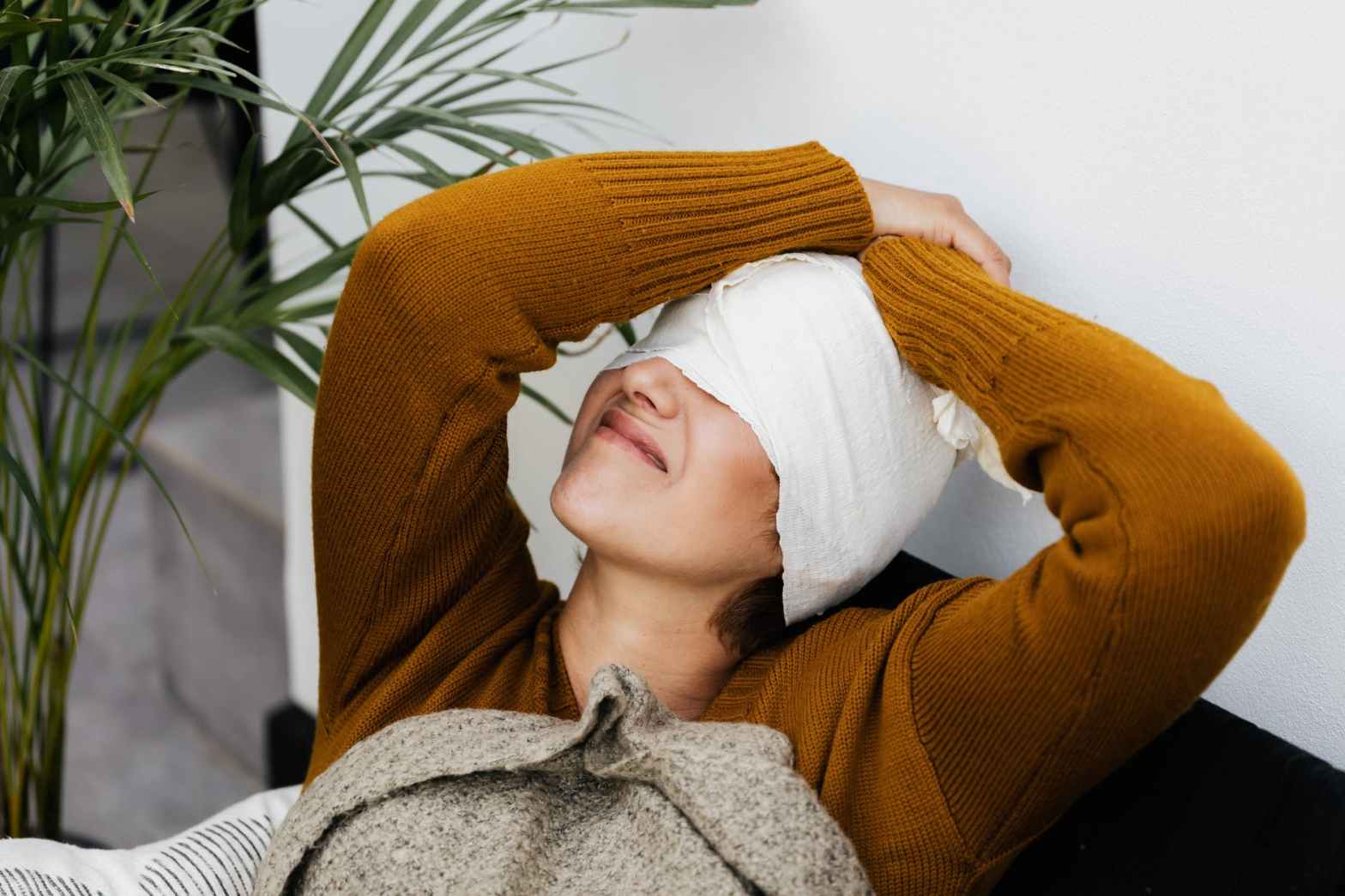
Photo by Karolina Grabowska on Pexels.com

One of the injuries most frequently acquired during sports is a contusion, so to speak bruising to the muscular tissue. While most such bruising is of little concern and will quickly resolve on by itself, more severe contusion that involves deeper lying tissue, may be a complication to athletes, causing them to have to refrain from any physical activity for quite a long time.

Damage to tissue beneath the skins surface may involve the crushing of muscles and connective tissue, and the rupturing of small, peripheral vessels, leading to the leakage of cellular fluids and blood into the surrounding tissue. The blue or blackish discoloration of the affected is a sign of such fluid leakage. The skin is usually not broken.

Contusions occur when an injury is produced by a direct, blunt, forceful impact to the body’s soft tissue, such as a blow, falling or jamming. At the located area there may be swelling and pain. There may be weakness and stiffness of the affected part. In some cases there may be the formation of a hematoma (blood collected at the point of impact that may be felt as a lump on the site of injury).

Complications to this type of injury are deep contusions impacting internal organs or bones.

Conventional 1st aid: RICE – Rest, Ice, Compression, Elevate; Medication for pain relief.

Major 1st aid homeopathic remedies for contusion are:

Arnica: For all types of contusion. Great pain relief remedy

Bellis perennis: Follows well after Arnica. Rapid onset of healing.

Hamamelis: Indicated where Arnica fails to do something.

However there are other remedies for such injuries: Aconite, Calendula, Conium, Echinacea, Hypericum, Ledum, Rhus tox., Ruta, Symphytum to mention a few.

References:

  • American Academy of Orthopaedic Surgeons (2016)Muscle Contusion (Bruise), Available at: http://orthoinfo.aaos.org/ (Accessed: June 2016).
  • Boericke, W. (2004) Pocket manual of homeopathic materia medica and repertory New Delhi: B.Jain publishers Ltd.
  • Clarke, J. (1994) A Dictionary of practical materia medica New Delhi: B.Jain publishers Ltd.
  • Morgan, Lyle (1988) Homeopathic treatment of Sports Injuries, Rochester: Healing Arts Press.
  • Walker, Brad (2007) The Anatomy of Sports Injuries, Chichester: Lotus publishing.
  • WebMD LLC (2016)Contusions Treatment & Management, Available at:http://emedicine.medscape.com/ (Accessed: June 2016).

Concussion – a potential sports-injury

Concussion can occur in the process of many physical activities, whether they are conducted for leisure or for a wage, whether an amateur or a pro. A concussion is a traumatic injury to the brain caused by a sudden acceleration, rotation or shaking of the head. This causes a forward and backward motion of the brain inside the skull.

Processes and functions of the brain are temporarily compromised and the patient may feel confused, show impaired coordination, balance or speech, and may experience memory loss for some time. A patient may also lose consciousness due to a concussion. Other, early indicative symptoms are headache, nausea, dizziness and drowsiness.

It is important to note that symptoms may not appear directly after the injury is contracted, they may be delayed for several days before they are noticed. Recovery from a concussion requires several days, yet repeated concussion may have lasting impact. Physical and mental rest, until symptoms have subsided, is key to recovering from this injury. Only a gradual return to activity is recommended, darting too fast into physical exertion may bring symptoms back.

Homeopathic remedies may support the recovery from concussion. The following remedies may be helpful in relieving the symptomatology:

Arnica, Belladonna, Glonoinum, Cocculus, Hypericum, Ledum, Nat.mur., Nux vom., Rhus tox., Spigelia

References:

  • American Academy of Orthopaedic Surgeons (2016) Concussion, Available at: http://orthoinfo.aaos.org/ (Accessed: June 2016).
  • Boericke, W. (2004) Pocket manual of homeopathic materia medica and repertory New Delhi: B.Jain publishers Ltd.
  • Clarke, J. (1994) A Dictionary of practical materia medica New Delhi: B.Jain publishers Ltd.
  • Morgan, Lyle (1988) Homeopathic treatment of Sports Injuries, Rochester: Healing Arts Press.
  • Walker, Brad (2007) The Anatomy of Sports Injuries, Chichester: Lotus publishing.

‘Tennis-elbow’ – a repetitive strain injury

The Tennis Elbow refers to an overuse injury, a repetitive straining of the muscles that attach to the bones of the arm at height of the elbow. Biologically this injury is termed lateral epicondylitis. The so called Golfer´s Elbow, is similar to the Tennis Elbow, however affects the inner area of the elbow joint, while the Tennis Elbow involves the outer area of the elbow. The Golfer´s Elbow is denoted as medial epicondylitis. It is the different swing movements that depict the focal point of trauma locality, and differentiate the Tennis- from the Golfer´s- elbow injury.

While overexertion is a frequent cause of this type of trauma, a direct impact to the area of the elbow may likewise promote this injury. Epicondylitis describes the irritation and inflammation that develops at the sides of the elbows epicondyles in the event of such physical trauma. Pain, swelling and tenderness may be symptoms experienced at the locality, and mobility of the affected arm is strongly restricted, as very painful.

None of these injuries have to be caused by playing tennis or golf. However athletes conducting physical activity using their arms in specific swing movements are more predisposed to such an injury. House or garden work can likewise be the cause of such trauma and can result in these injuries.

Conventional 1st aid measures to promote relief are the R.I.C.E.R recommendations. Rest, Ice, Compress, Elevate the affected arm, and if there is no relief Refer to a doctor.

Some homeopathic remedies that may assist recovery from this type of injury are: Arnica, Belladonna, Bryonia, Rhus tox., Ruta

References:

  • Clarke, J. (1994) A Dictionary of practical materia medica New Delhi: B.Jain publishers Ltd.
  • Morgan, Lyle (1988) Homeopathic treatment of Sports Injuries, Rochester: Healing Arts Press.
  • Walker, Brad (2007) The Anatomy of Sports Injuries, Chichester: Lotus publishing.

In a nutshell…Sleep Apnoea

What is Sleep Apnea?

Sleep Apnea is a relatively common sleep disorder that is characterized by prolonged breathing pauses. While asleep, the individual suffering of Sleep Apnea repeatedly stops breathing for the duration of at least 10 seconds, or longer. This is problematic as the reduced respiration leads to interrupted sleep, and deprives the body of oxygen, impacting its saturation in the blood and consequentially posing a great risk to the sufferers health.

The greatest health risks are the development of high blood pressure, cardiac arrhythmia, heart attack, or stroke. However, in particular the daytime micro-sleep that sufferers can experience, can pose a threat to the life of the sufferer and potentially others, if occurring at work while operating machinery, or if in traffic while driving a car.

Persons who snore loudly during their sleep, who experience interrupted sleep patterns, wake after a full nights sleep feeling tired and exhausted, and who suffer of day sleepiness, are irritable, have memory problems, difficulty concentrating, and feel depressed, should become aware of this disorder.

There are three types of Sleep Apnea

Obstructive Sleep Apnea: This is the most common form of the sleep disorder and occurs when, during the process of inspiration, the muscles relax in the back of the throat, and fail to open the airway, obstructing airflow to the lungs. The brain, in turn, receives the signal that breathing is impaired and consequentially stirs the individual to awaken and begin breathing again. These breathing pauses are either an ‘Apnea’, where the airway is blocked completely, or an ‘hypopnea’ where the occlusion is only partial, of 50% or more.

Central Sleep Apnea: This is the more severe form of Apnea, as this is a failure of the brain to properly command muscle contraction during respiration. There is hence, no effort made to actually breath.

Complex Sleep Apnea: This is a combination of the obstructive and the central form of Sleep Apnea.

What factors contribute to the development of Sleep Apnea?

The prevalence of Sleep Apnea is on the rise. Factors promoting the development of Sleep Apnea are excess weight, menopause (in women), the use of medicines such as sedatives, tranquilizers or narcotics, the consumption of alcohol, and smoking. However there is also a hereditary factor, with the prevalence being increased in families where there is a history of Sleep Apnea, and there are factors such as being male, of advanced age, having a strong neck, or an anatomically conditioned nasal congestion that can contribute to the development of Sleep Apnea.

How is Sleep Apnea treated?

Whilst preventative measures are recommended in the treatment of Sleep Apnea, such as limiting alcohol intake, quitting smoking and losing weight, these will not suffice to overcome the syndrome. Sleep Apnea cannot be treated to its full resolution as of yet.

Continuous positive airway pressure (CPAP) is the main treatment option for Obstructive Sleep Apnea. It is also the most successful therapeutic intervention. With the night time use of a CPAP equipment, a constant flow of air pressure is brought, through a face mask worn by the patient, into the respiratory tract. This pressurized air is adjusted to overcome the muscular obstruction, and thus to maintain the airway open. The patient can continue breathing, most episodes of Sleep Apnea are removed, and most symptoms associated with the disorder are alleviated. The sufferer of Sleep Apnea will have to continue this treatment for life whenever he or she goes to sleep.

Is homeopathy effective in treating the symptoms of Sleep Apnea?

There is little to no research investigating the use of Homeopathy for the treatment of Sleep apnea. However, Homeopathy has in its Materia Medica diverse remedies that can provide relief of the symptoms, and can be supportive in the treatment of the concomitant complaints associated with the disorder. Such treatment though requires an in-depth case-taking and thorough evaluation of the case history presented. Some of the remedies that may be helpful for sufferers of Sleep Apnea are:

Arsenicum Album: There is a shortage of breath with every exertion and upon lying down during the night. There is a violent sensation of constriction about the throat with anxiety felt near the heart that prevents deep breathing. He or she fears to suffocate. The individual needing this remedy is clearly vitally weakened, restless and exhausted. Sleep is disturbed, restless and the individual is anxious. Sleep is disturbed by with suffocative fits.

Grindelia Robusta: This remedy in affections associated with a paralysis of the vagus nerve. This nerve runs from the brain through the body and diverse systems, including the throat. It is in charge of giving off impulses to the pharyngeal and laryngeal area. As such this remedy is indicated for individuals that stop breathing upon falling asleep, and consequentially wake with a start, gasping for breath, as may be the case in Sleep Apnea. The individual needing this remedy is afraid to fall asleep again, because he or she fears the feeling of suffocation.

Lachesis: This remedy has a great impact on the nervous system. Here there is a dominant feeling of strangulation and suffocation upon going to sleep, and the individual cannot bear any tight clothing around his or her neck. There is a distressed feeling about the chest. He or she is impelled to breath deeply. While falling asleep breathing almost stops entirely. There is a sudden starting from sleep.

Opium: In this remedy there is a strong general sluggishness and reduced vital reactivity. The cerebrospinal functions are weakened. This individual snores deeply and his or her breathing is rattling and stertorous. The respiration is unequal and intermittent. He or she stops breathing upon falling asleep, and must be shook to begin breathing again.

Spongia tosta: There is cramping and constriction about the throat. The individual is breathless. Respiration is short, panting and hindered. The airway feels dry. There is strong palpitation, anxiety and a fear of dying on account of the impaired respiration. He or she wakes in a start feeling close to suffocation.

Sulfur: Shortage of breath occurs in the middle of the night and must sit up. He or she cannot lie on the back and cannot breath deeply. There is the sensation of much oppression and burning about the chest. He or she jerks and twitches during sleep, and wakes up frequently during the night and then is wide awake. There is an inclination to take day time naps.

References:

Boericke, W. (2004) Pocket manual of homeopathic Materia Medica and repertory New Delhi: B.Jain publishers Ltd.

Davis, K. (2018) What you need to know about sleep apnea, Available at: https://www.medicalnewstoday.com/articles/178633.php(Accessed: May 2019).


Franklin, K.A. and Lindberg, E. (2015) ‘Obstructive sleep apnea is a common disorder in the population—a review on the epidemiology of sleep apnea’, Journal of Thoracic Disease, 7(8), pp. 1311–1322..


Mayo Clinic (2019) Sleep Apnea, Available at: https://www.mayoclinic.org/diseases-conditions/sleep-apnea/symptoms-causes/syc-20377631(Accessed: May 2019).


National Sleep Foundation (2019) Sleep Apnea, Available at: https://www.sleepfoundation.org/sleep-apnea(Accessed: May 2019).


UCI Health (2019) Sleep Apnea, Available at: http://www.ucihealth.org/medical-services/sleep-services/sleep-apnea(Accessed: May 2019).

Voisin, H. (2018) Materia Medica für den homöopatischen Praktiker, 1 edn., Kandern: Naranaya Verlag.