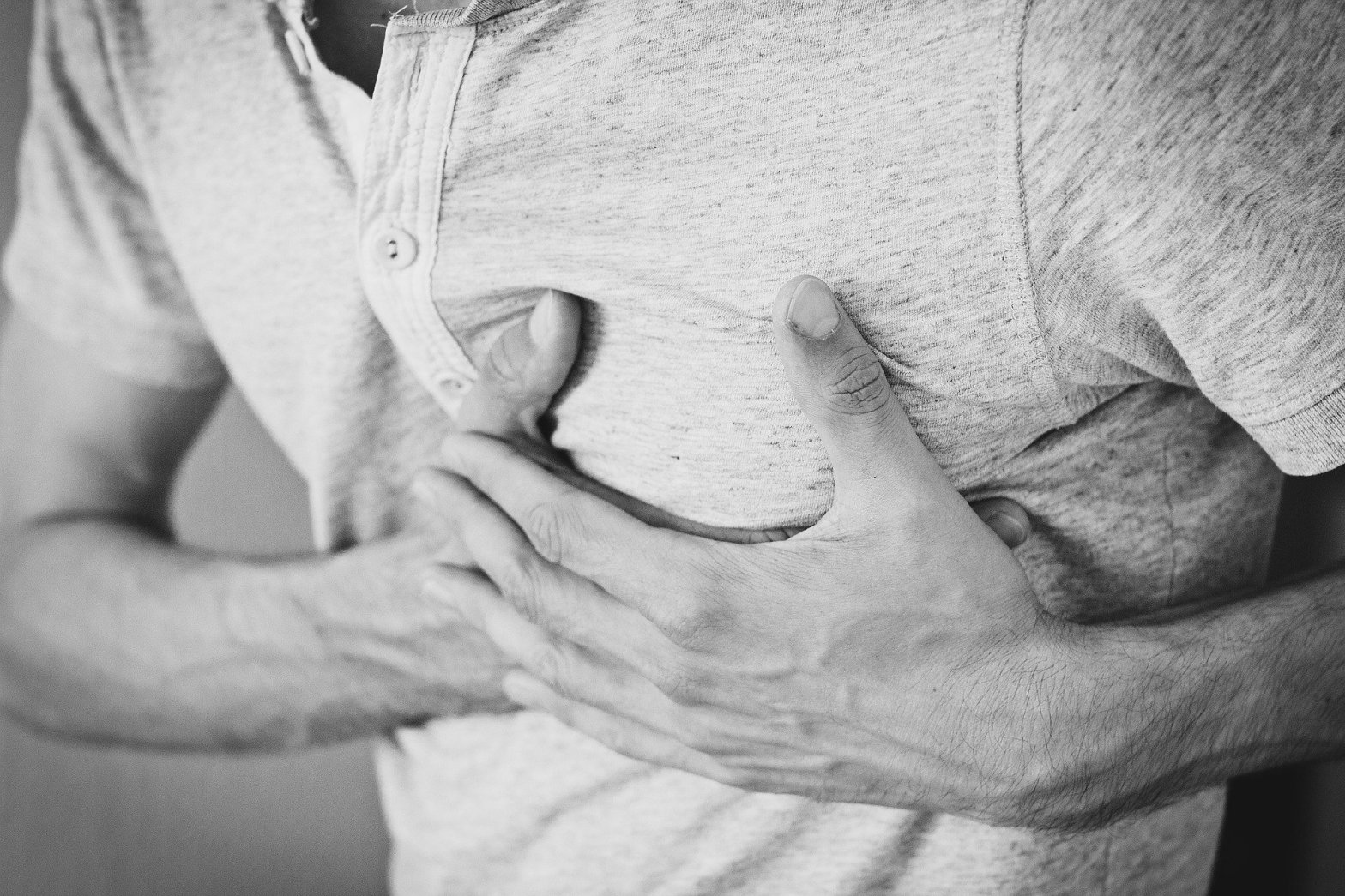
A false positive of heart diseases – the Roemheld syndrome

Photo by Andrea Piacquadio on Pexels.com

It has become evident in our modern times, that many of our lifestyle habits, in particular keeping up with our increasingly hectic society, are taking their toll on our health. Our work-life balance is skewed heavily towards stress and our nutritional preferences are dictated by the time available to cook and the income to spare. It is therefore not surprising that our health is impacted negatively by how we conduct our life and manage our care. Such factors lead to the creation of ever new ‘life-style’ ailments that we succumb to, and are very frequently misdiagnosed for what they are not and are as a consequence not seldom inappropriately treated. One such ‘modern’ disease, that likely has some of its causative factors in our life-style and nutritional habits, is undoubtedly the ‘Roemheld syndrome’.

Ultimately the cause of the ‘syndrome’ is the development of gas in the digestive tract. This may be of varied origin and besides mal-nutrition, food-intolerance, indigestion, speaking while chewing and as such ‘swallowing’ air, may be caused by life-style factors such as stress, anger, or depression. Our sedentary work practice may play a role. We are accustomed to conduct most of our work sitting down, we engage in little physical exercise, eat rapidly and unhealthily, sooner or later such habits must make us ill. However there are also disease factors that promote Roemheld syndrome. IBS, irritable bowel syndrome, has been named as a potential adjunctive cause of ‘RS’, as has the existence of a hiatus hernia. Neural involvement of the vagus nerve has also been linked to the development of the ‘RS’ symptomatology. In this case sensory communication from the digestive tract to the brain is believed to impact the development of symptoms.

During an ‘attack’, the bloated gastro-intestinal tract displaces the organs in the thoracic cavity. To the patient there appears to be insufficient space in the chest. The bloated stomach and bowels push the lungs aside, generating pressure on the heart, causing anxiety, difficulty breathing, oppression, weakness, dizziness and faintness in the patient. The pulse rate increases, palpitation may appear and arrhythmia are triggered, in the form of tachycardia or extra systoles. It is not infrequent that these symptoms take a patient to see a cardiologist. However the causative factors of the presenting symptoms are often misinterpreted as originating from the heart itself.

In many cases the management of ‘RS’ can be achieved by altering dietary and lifestyle habits. As such, avoiding certain foods can alleviate symptoms and prevent ‘attacks’. Reducing alcohol and restricting the consumption of fizzy drinks, which promote fermentation in the bowels and thereby produce gas, can be helpful. Fast food, fatty meals, vegetables such as of the onion family, cabbage, pulses, pastry, and particularly white flour products should be avoided; such changes sooth the digestive activity of the stomach and bowels. However surgical intervention may be necessary where a hiatus hernia is identified as causative factor.

Conventional medicine suggests the administration of medication that reduces bloating, and inhibits the development of gas in the digestive tract. Yet this medical intervention is one that only palliates and does not remove the underlying cause. The issue remains and drug side-effects can produce consequential troubles in the long run. Acute alleviation can be achieved by herbal tea infusions with fennel, melissa, mint, juniper or black cumin. From a homeopathic perspective, remedies that aim at the removal of the digestive pathology and take into consideration the patient idiosyncratic cardiac symptomatology should be considered (gastro-cardia symptom complex).

References:

Brisson, J. (2016) Can Stomach Issues Cause Heart Disease? Part 2: Roemheld Syndrome, Available at: http://fixyourgut.com/can-stomach-issues-cause-heart-disease/ (Accessed: 27 February 2017).

N.A. (n.d.) Roemheld Syndrome Information and Resources, Available at: http://roemheld-syndrome.com/ (Accessed: 27 February 2017).

Stange, D. (2017) Roemheld-Syndrom – Ursachen, Symptome, Therapie, Available at: https://www.gesundheits-fakten.de/roemheld-syndrom-ursachen-symptome-therapie/ (Accessed: 27 February 2017).

Homeopathy for runny noses

Coryza is commonly referred to as a runny nose and is characterized by an acute inflammation of the mucous membranes of the nose. It frequently occurs concomitant to the ‘common cold’ and may be caused by a bacterial or viral infection, or may develop as an allergic reaction to diverse allergens such as dust, pollen and others.

The inflammation in the nasal cavity increases the secretion of mucous causing the typical symptom of the runny and congested nose. There may be nasal irritation, itching, burning, and sneezing. Oftentimes there is also some involvement of the eyes with redness, watering, swelling or itching. The inflammation may extend to the larynx, bronchi and throat, producing distinctive symptomatology there. Hence the patient may generally feel run down, may develop a cough, catarrh, frontal headache, lassitude and fatigue.

Some homeopathic remedies for coryza are:

Allium cepa: This coryza is characterized by a profuse watery, acrid discharge. Distinctive for this remedy is the worsening of the coryza in a warm room. This patient is better outside. There is an accompanying eye symptomatology in Allium cepa. The eyes are watery, smarting, and burning. There may be coughing and hoarseness.

Arsenicum album: The nasal cavity feels hot and burning. There is a watery discharge. The patient is thirsty and feels weak.

Belladonna: The nose feels obstructed and there is only light discharge. Everything feels dry and sore into the throat. There may be throbbing in the head and sensitivity to light. There may be a tickly cough. Thirst is increased.

Chamomilla: This remedy is indicated where there is heat of the head. One cheek is typically red, the other pale. The coryza is usually worse at night. The little patient is fretful, and calms down only if carried about.

Dulcamara: Constant sneezing with running nose and nasal congestion. Eyes are watering and swollen. May come on from becoming chilled after exertion. Symptoms are worse outside.

Gelsemium: There is a general sluggishness and chilliness. A dull headache and drowsiness are characteristic. The eyes are heavy; the eyeballs feel lame and sore.  There is watering of the eyes, sneezing and discharge from the nose. There is non-stop sneezing.

Euphrasia: The eyes are strongly affected with this remedy. There is a profuse, acrid watering from the eyes. The lids and face may become inflamed, excoriated, agglutinated. Lamplight causes photophobia. The discharge from the nose is profuse, bland, and fluent. There is sneezing, and worsening during the night and when lying down.

Eupatorium: With sneezing and headache there is aching in the bones, backache, chilliness and nausea.

Mercurious sol.: This remedy has some similarity with Arsenicum album. However symptoms are less severe and worse at night. The throat is sore there is much mucous salivation. There is aching and lameness in muscles and bones. There may be much sweating.

Rhus tox.: This is the remedy where getting wet brings on the coryza/ cold. The entire body may feel lame and may ache, especially the back and the eyelids.

References:

Adams, M. (1913) A practical guide to homeopathic treatment Philadelphia: Boericke & Tafel.

Lockie, A. (1991) The family guide to homeopathy Aylesbury: BPCC Hazell Books

Homeopathy for epidemics – efficacious treatment for the masses!

The efficacy of homeopathy is often questioned and subjected to doubt, due to its yet unknown and unproven action mechanism. Yet, history has provided definitive proof of homeopathys effectiveness, aside of the many individually and successfully treated case-histories. Pandemics and epidemics, situations bearing a great health risk to vast numbers of people, in fact populations, have been exemplary phases of great homeopathic treatment achievement.

While the homeopathic treatment approach to such outbreaks falls somewhat short of the absolute compliance with common homeopathic prescribing methodology and its underlying philosophy, it is nonetheless the most efficient form of therapeutic intervention with regard to the historic presentation of such mass illness.

Hahnemann, the founder of classical homeopathic medicine, has always stressed in his writings that the homeopathic approach to healing is one of highest individuality and holism. He stresses this in particular in aphorism 82 of the Organon where he states that: “It remains, for literacy of the indication of each disease (psoric) to be healed, for the homeopathic doctor an indispensable duty to accurately record the plumbable symptoms and idiosyncrasies… …there cannot be a true healing of this or all other diseases, without strict individualization of each case of illness” [1].

Yet, it is exactly this premise that is failed in the homeopathic treatment of masses of people. In the case of epidemics, or pandemics that have an even wider geographical spread than epidemics and commonly inflict a larger number of people with an infectitious disease [2], it is hardly feasible to employ the above mentioned standardized treatment methodology that customarily requires a thorough case-taking, and taking note of the idiosyncrasies of every individual patient infested.

In such cases the homeopathic approach offers a treatment procedure that adopts a prescription practice channelling that of allopathic drug administration, namely one of prophylactic prescribing. This form of prescription requires the administration of a drug, or as in the case of homeopathy, a remedy, in the absence of a disease symptomatology in a patient, that is, ahead of the individual having fallen ill. The aim of such prophylaxis is the avoidance of a potential future infliction with a disease [3]. This form of selecting and administering a remedy furthermore requires giving numerous individuals the same remedy prescription without taking their individuality into account. This procedure though, falls short of compliance with said principal homeopathic dicta, of prescribing according to the individual symptom expressions of the disease in the sick individual.

It is in aphorisms 101 of the Organon that Hahnemann provides a justification for this approach in the event of an epidemic, and describes the remedy to be administered in such an outbreak, the ‘genus epidemicus’, as follows: “…Each of such Collective-diseases exhibits only upon closer observation of multiple cases the epitome of its symptoms and signs…the diligently exploring practitioner can even find the true state and the characteristic picture from the first or second patient…and can then already find a matching homeopathically adequate curative…” [1].

In Aphorism 102, Hahnemann stresses this further: “…the outlined disease picture becomes increasingly complete…it becomes more characteristic and encompasses the peculiarities of this Collective-disease…the subsequent cases will confirm the accuracy of the selected remedy or will point [him] to a even better matching homeopathic remedy, the simillimum…” [1]. He continues in this aphorism to specify why this method is most plausible, and describes the nature of disease in epidemics: “…All who contracted this pestilence have the same disease that came from one and the same source, the entire extent of such an epidemic disease and the totality of its symptoms belong to its cognition… it cannot be perceived just from one sick individual, only from the suffering of multiple ill, of differing physical appearance, can it [symptom complex] fully be abstracted and extracted…” [1].

The ‘genus epidemicus’, is the one remedy that matches best the collective symptoms of many. It is extrapolated from the case-taking of a number of persons inflicted with the disease of an epidemic. The symptomatology of these patients taken collectively, and viewed as if expressed by just one patient, is then found to be the curative for all that have the epidemic illness [4]. If this one remedy is found, it can be prescribed to all, generally, as opposed to individually, that is to just one patient, and can be administered, prophylactically, to those that are not carrying the disease, but may potentially contract it.

It is homeopathys medicinal proficiency that has, many times, provided recovery to those inflicted with a pandemic or epidemic disease, in history and up until today. The most recent documentation of the successful application of homeopathy in an epidemic is a study that was undertaken in 2007 in Cuba, where patients were treated homeopathically during the annual outbreak of leptospirosis. Homeopathic treatment resulted in a dramatic reduction of infections in the high risk population [5]. It can therefore safely be asserted that homeopathy is an efficacious treatment approach when used for the treatment of many, where many carry the same contagious disease and a generalized homeopathic prescription is provided.

References:

[1] Hahnemann, S. Organon der Heilkunst (2.Auflage). Heidelberg: Karl.F.Haug Verlag; 1974.

[2] Navab, I. (2013) Lives saved by homeopathy in epidemics and pandemics [online] available at: https://drnancymalik.wordpress.com/2013/01/23/epidemics-and-pandemics/

[3] Macmillan dictionary [Internet]. 2013. Prophylaxis; [cited 2013 March 23]. Available from: http://www.macmillandictionary.com/dictionary/british/prophylaxis

[4] van der Zee, H. (2009) The future of homeopathy , homeopathy for Epidemics, collective trauma and endemic diseases [online] available at: http://www.interhomeopathy.org/fr-the-future-of-homeopathy–homeopathy-for-epidemics-collective-trauma-and-endemic-diseases

[5] Bracho G, Varela E, Fernández R, Ordaz B, Marzoa N, Menéndez J et al. Large-scale application of highly-diluted bacteria for Leptospirosis epidemic control. Homeopathy 2010; 99(3), 156-166. doi:10.1016/j.homp.2010.05.009

The homeopathic treatment of sports-injuries

Sports injuries are injuries that result from acute trauma or repetitive stress associated with athletic activities[1]. The dissertation  is a review of research trials and studies investigating the homeopathic treatment of sports-injuries.

The dissertation is published here: The homeopathic treatment of sports-injuries

The souvenir no one wants – post-war trauma

Combat related health issues are concerns that cannot and should not be ignored. While these are not complaints that only servicemen and women are ‘confronted with’, when returning home from deployment, they are also not always injuries to the physical body of the combat personnel. Many servicemen and women bringing home non-visual injuries.

Mental injuries and trauma are frequently ignored, by the sufferer, the care-provider and the society that army personnel returns to when coming home. Very often these complaints are also misinterpreted. Yet health issues such as anxiety and trauma disorders are increasingly becoming more prevalent. To date these complaints are insufficiently acknowledged, managed and treated.

PTSD, post-traumatic-stress-disorder, is the trauma issue that may evolve from the exposure to experiences of warfare, combat or terror. PTSD was first exhibited in Vietnam -War – veterans, but was only acknowledged and classified by the American Psychiatric Association as a mental disorder in 1980. Increasing numbers of military personnel exhibit symptoms associated with their experiences during deployment to war zones and engagement during battle.

These are not occasional states of anxiety, but mental conditions defined by distress that prevents people from living a normal life. Characteristic for these types of anxiety and trauma disorders are persistent, overwhelming states of worry and fear. These phases can be disabling, and may appear unmanageable. Panic, phobias, compulsion, and depression may combine, leaving the individual unable to lead a normal life.

Conventional medicine uses medicinal and psychoanalytical approaches to assist individuals suffering of PTSD. However, ever increasingly holistic and complementary therapies are being used by patients to alleviate the symptoms of trauma syndromes. There is little research into the effects of CAM (complementary and alternative medicine) treatments for PTSD, but experiential reports offer promising testimonials of effectiveness.

The CAM therapies are holistic therapeutic approaches that consider the totality of patients, taking into account the physical, mental and emotional plane of patients, thereby achieving amelioration, and recovery of the individual as a whole.